
A corporate Iftar is the one company event of the year where getting the timing wrong is not a minor inconvenience. It is the difference between a room of guests breaking their fast together and a room of guests watching the clock.
Under UAE Federal Decree Law No. 33 of 2021, private sector working hours are reduced by two hours daily throughout Ramadan, a legal requirement that already reshapes how the working day runs before a single event is planned. For corporate clients hosting an Iftar, that same spirit of adjusted expectations needs to extend to the event itself. This is not a gala dinner moved earlier in the evening. It runs on entirely different rules, and treating it as a standard corporate function with different food is the most common way well-intentioned companies get it wrong.
Sunset Sets the Schedule, Not the Other Way Around
The single detail that determines whether a corporate Iftar succeeds is timing, and it shifts by a few minutes every single day across the month. Guests need to be seated, comfortable, and ready the moment the call to Maghrib prayer sounds, not queuing at a buffet or making small talk in a reception area while the room waits.
This means confirming the exact sunset time for the specific date and location before finalising anything else, then building arrival, seating, and prayer facilities around that fixed point rather than treating it as a detail to confirm later. A schedule built backwards from sunset, rather than forwards from a generic evening start time, avoids the single most common Iftar planning mistake.
The Order of the Meal Is Not Optional
An Iftar has a specific rhythm that differs from a standard corporate dinner, and skipping it undermines the entire gesture. The fast breaks first with dates and water or a light drink, followed by a short window for Maghrib prayer, before the fuller meal is served. Rushing straight to a buffet the moment sunset arrives, without honouring this order, reads as a company that offered the event without understanding what it represents.
Prayer facilities deserve the same planning attention as catering. A clean, quiet, appropriately positioned space for Maghrib prayer, with space and time built into the schedule rather than treated as an afterthought, signals genuine respect rather than a company checking a cultural box. This includes practical details easily overlooked in the rush of event logistics, such as prayer mats, a clear direction toward Mecca, and a room quiet enough to actually use for its purpose rather than doubling as a coat check or overflow seating area.
What Belongs on the Menu, and What Doesn’t
Iftar catering should lead with traditional dishes rather than a generic international buffet with a token nod to the occasion. Dates, laban, harees, and a proper spread of mezze and mains give the meal the character it is meant to have, while still accommodating dietary needs across a genuinely mixed team.
- Dates and water served first, immediately at the moment of sunset, before anything else
- A short, unhurried window set aside specifically for Maghrib prayer
- A menu led by traditional Ramadan dishes, with clear labelling for dietary and allergen needs
- Portion planning that accounts for guests eating a full day’s nutrition in one sitting, not a light dinner
- A pace to the evening that allows conversation and reflection, not a rushed corporate agenda squeezed into the same slot
None of these require an elaborate production. They require the sequence and the details being handled with the same seriousness as any other part of the business the company runs.
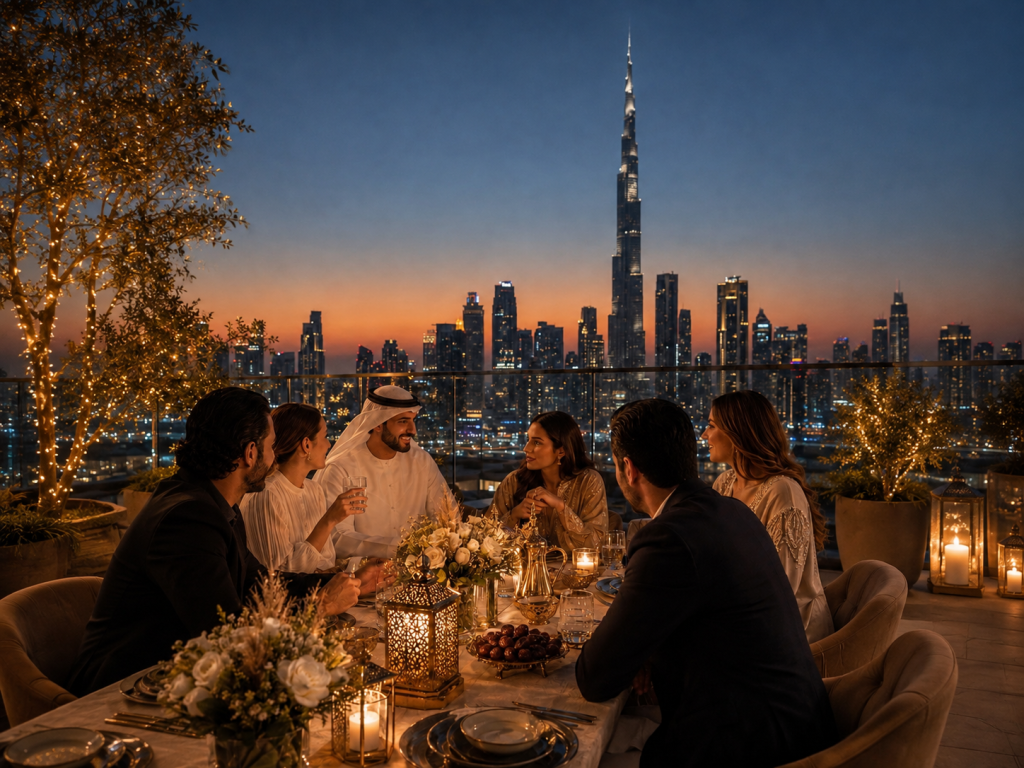
Seating Style Sets the Mood More Than Decor Does
A corporate Iftar works well in two distinct formats, and choosing between them matters more than most companies expect. A majlis-style setup, with low seating, floor cushions and a shared communal feel, leans into tradition and works particularly well for a client-facing evening where hospitality is the point. A more conventional seated dinner, with formal tables and structured service, suits a larger internal gathering where efficiency matters as much as atmosphere.
Neither format is inherently better. The mistake is choosing one without considering the guest list it needs to serve. A majlis setup for two hundred employees creates logistical strain that undermines the relaxed tone it is meant to create. A formal seated dinner for a small, close client group can feel unnecessarily stiff for an occasion built around warmth and connection.
Deciding Who Actually Belongs in the Room
An internal team Iftar and a client-facing Iftar are different events wearing the same name, and conflating them is a common misstep. A team gathering can lean casual, prioritise inclusivity across the whole staff regardless of role, and focus on genuine connection over business content. A client Iftar carries more formality, a tighter guest list built around real relationships rather than broad invitations, and often benefits from a senior leader present to receive guests personally as they arrive.
Companies that try to combine both audiences into a single evening often end up with an event that satisfies neither. Employees feel like an afterthought to the client experience, and clients sense an event that was not built specifically around them. Where budget allows, separating the two, even into two smaller and more intentional gatherings, tends to produce a better outcome for both audiences than one large, unfocused evening.
Dress Code and Tone Deserve Clear Communication
Ramadan is a period of modesty, and a corporate Iftar sits somewhere between business formal and traditional dress depending on the tone a company wants to set. Communicating this clearly in the invitation, rather than leaving guests to guess, removes an entirely avoidable source of discomfort on the night.
The tone of the evening itself should lean toward warmth and unhurried conversation rather than a packed agenda of speeches and announcements. An Iftar that turns into a standard corporate event with food attached misses what makes the occasion meaningful in the first place.
Why an Iftar Is a Relationship Investment, Not a Line Item
A well-run corporate Iftar does more for client and employee relationships in one evening than most companies achieve across several standard networking events. It signals cultural understanding, genuine hospitality, and respect for a period that matters deeply to a significant part of Dubai’s workforce and client base, whether or not everyone in the room is observing the fast themselves.
This is precisely the kind of event where getting the details right, from the sunset timing to the order of the meal to the quality of the prayer space, is what separates a company that understands Dubai from one that is simply operating in it. Our work with corporate gala dinners and business events in Dubai carries the same attention through to every Iftar we plan.
If you are planning a corporate Iftar dinner in Dubai and want it handled with the cultural care it deserves, get in touch. The right details, done properly, are what your guests will remember long after Ramadan ends.

