
A bank’s year-end dinner and a boutique wealth advisory’s client evening are not the same brief, even though both sit under the label “financial services event.” One is answering to a global compliance framework. The other is trying to make forty high-net-worth clients feel like the firm’s most important relationship. Treating both the same way is the fastest way to get either one wrong.
DIFC now has real weight behind it. The centre’s active registered companies passed 10,000 for the first time in the first half of 2026, with regulated financial services firms rising 16 percent to 1,134, according to Khaleej Times. That is a significant concentration of banks, asset managers, insurers and wealth advisories inside a few square kilometres, all of them planning events for audiences with very specific expectations around discretion, compliance and tone.
Compliance shapes the brief before the guest list does
Financial services events carry a layer most other corporate events don’t: what can and cannot be said, shown, or given away. Gift value limits, disclosure requirements around client entertainment, and internal policies on what counts as a reportable benefit all shape decisions that look purely creative from the outside, like the choice of favor or the wording on a menu card. A firm’s compliance team needs to be looped in early, not consulted after the invitations have already gone out.


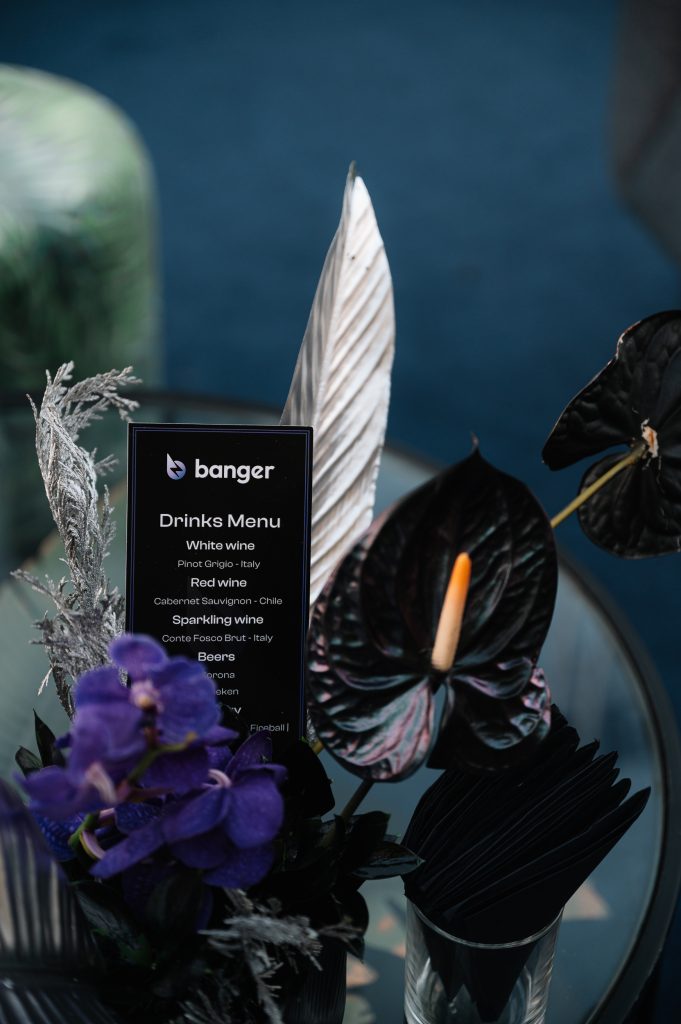

This isn’t a constraint that makes the event less impressive. It’s a constraint that, handled well, becomes invisible to guests entirely. Nobody at a well-run gala notices what wasn’t included. They notice whether the evening felt considered.
Timing carries its own compliance shadow that has nothing to do with venues or menus. Firms operating on quarterly or annual reporting cycles need events scheduled clear of earnings announcements, board meetings, and any period where client entertainment might overlap awkwardly with a live regulatory disclosure. A gala booked the same week as a results announcement puts compliance in an uncomfortable position that a different date would have avoided entirely.
Institutional clients and private clients are two different rooms
A bank’s institutional client dinner and a wealth manager’s private client evening call for genuinely different atmospheres, even when the venue and budget look similar on paper. Institutional guests, other bankers, fund managers, corporate treasurers, respond to precision: a tight agenda, a clear reason for the gathering, minimal small talk before the substance of the evening begins.
Private wealth clients want the opposite. They are being courted as individuals, and an evening that feels like a corporate event rather than a personal occasion undercuts the entire point of the relationship. The seating, the pacing, even the choice of who from the firm sits where, all read differently to someone who manages a hundred-million-dirham portfolio than to someone allocating an institution’s treasury.
DIFC’s growth in family offices and wealth structures adds another layer to this. Family-related entities registered with the centre have grown sharply over the past year, and firms serving this client base are increasingly hosting multi-generational events, gatherings that need to work for a founder in his seventies and his children running the next generation of the business at the same table. That is a very different brief again from either the institutional dinner or the standard private-client evening, and it usually needs its own approach to pacing, formality, and even the guest experience itself.
Discretion is not optional, it’s the product
Financial services clients, more than almost any other corporate audience, expect their attendance at an event to stay exactly as private as they want it to be. A guest list that leaks, a photographer who wanders into the wrong conversation, or a seating chart visible to the wrong person can damage a relationship a firm spent years building. Private or semi-private settings, controlled photography, and a guest list handled with real discretion aren’t add-ons for this audience. They are the baseline expectation.
International visitors add a further layer of sensitivity. DIFC continues to attract regional headquarters and global institutions setting up a Dubai presence, which means many client events now include executives flying in specifically for the occasion, often meeting the local team for the first time in person. These guests are forming their first physical impression of the Dubai office through this one evening, and a firm that gets the tone right sends a signal about its operational quality that no amount of correspondence beforehand can substitute for.
What a financial services event in Dubai actually needs:
• Compliance sign-off on gifts, favors and any form of client entertainment, secured before creative decisions are finalized
• A clear distinction in tone and pacing between institutional and private-client audiences, even within the same firm
• Controlled, discreet photography with an agreed policy on what can and cannot be shared afterward
• A guest list treated with the same confidentiality as the portfolios these clients hold
• A venue and format matched to the specific segment being hosted, not a single template reused across every client tier
Skip the compliance step and the firm risks an internal problem nobody wants to explain after the fact. Skip the discretion, and the damage lands directly on a client relationship that took years to build.
Award ceremonies carry their own version of this problem
Financial services firms increasingly host or sponsor award evenings, recognizing top performers, key partners, or milestone achievements. These events sit closer to institutional territory but still require careful handling: recognizing the right people publicly, in the right order, with the right framing, matters more in an industry where seniority and internal politics run deep. Getting a title wrong or an order of presentation wrong is remembered far longer than most firms expect, and in an industry this networked, word travels between firms faster than anyone would like to admit.



Why this brief needs a specialist, not a generalist
Running an event for a DIFC-based financial firm means understanding both the compliance environment these companies operate under and the very different expectations of an institutional room versus a private client evening. It also means having a team practiced in exactly the level of discretion this industry expects as a baseline, not an upgrade. Most firms don’t have anyone internally whose job is specifically to hold all of this at once, compliance, tone, discretion, timing against the reporting calendar, which is exactly why so many financial services events end up feeling generic despite the budget behind them.
We build financial services events around this reality: the corporate events we run for DIFC-based clients, from institutional dinners to private wealth evenings and award ceremonies, are shaped around compliance requirements and discretion from the very first conversation, not retrofitted once the concept is already set.
If your firm is planning a client or institutional event in Dubai and getting the tone, the compliance, and the discretion right matters as much as the evening itself, get in touch. The earlier we’re involved, the fewer surprises there are once compliance gets its first look.

