
A last-minute event is not a smaller version of a planned one. It is a different discipline entirely.
Every planner in Dubai has taken the call. A client needs a milestone birthday pulled together in ten days, or a corporate client has a delegation arriving next week and nothing booked. Most companies will tell you this cannot be done properly. The honest answer is that it can, but only if the person handling it already has the relationships a short timeline does not allow time to build from scratch.
Why Timing Works Against You in Dubai Specifically

Dubai’s event calendar has a genuine peak season, and it is not subtle. Through Q4, particularly October to December, and again around Ramadan and UAE National Day, the city’s best venues and vendors book out fastest, often weeks or months ahead of anyone realising they should have called sooner. A last-minute request during these windows is not competing against an empty calendar. It is competing against every other client trying to do the same thing at the same time.
This is where an established planner earns their fee in a way that has nothing to do with creativity. Access matters more than ideas when the clock is this tight. A vendor who already trusts you will find you a slot they would not offer a first-time caller. A supplier who has been paid on time for three years will move your order to the front of the queue without being asked twice.
What Gets Cut First, and What Never Should
The instinct under time pressure is to try to do everything, just faster. That almost always produces a worse result than deciding early what genuinely matters and protecting it completely.
- The guest experience on arrival, since first impressions form in the opening minutes and cannot be fixed later
- One or two signature moments that make the event memorable, rather than ten smaller details spread thin
- Food and drink, since this is the one area guests notice immediately if it is rushed
- Anything requiring a government permit or approval, since these have fixed processing times regardless of your deadline
- Clear communication with guests about timing and expectations, which costs nothing and prevents most complaints
Everything else, from elaborate custom decor to a longer entertainment lineup, can be simplified without anyone in the room noticing. The mistake most people make under pressure is protecting the wrong list.
What a Genuinely Fast Timeline Actually Looks Like

Ten days sounds impossible until it is broken into what actually needs to happen in what order. The first two days go entirely to decisions, confirming the date, the guest count, the budget, and the two or three moments that matter most. Vendors get approached in parallel from day three, not sequentially, since waiting for one confirmation before contacting the next supplier is the single biggest time loss in any rushed timeline.
By day five or six, everything that requires a permit or government approval needs to already be in motion, since these processes run on fixed timelines that no amount of urgency will shorten. The final two or three days are reserved entirely for confirmation calls, a run-through of the schedule, and resolving whatever small detail was left open. Clients who try to keep making creative changes into the final days are usually the ones who end up disappointed, not because the idea was wrong, but because there was no longer time left to execute it properly.
Speed Is Not the Same as Cutting Corners
There is a difference between a fast timeline and a compromised one. A fast timeline means decisions get made quickly and vendors move in parallel instead of waiting on each other. A compromised event means corners get cut on the things guests actually notice, usually because nobody made the priority calls early enough to protect them.
The clients who end up disappointed by a last-minute event are rarely disappointed by the speed itself. They are disappointed because nobody told them clearly, on day one, what a ten-day timeline realistically allows and what it does not. Setting that expectation honestly, at the very start, is what separates a fast success from a rushed disappointment.
Corporate Requests Move Differently Than Private Ones
A last-minute corporate booking usually comes with a fixed, non-negotiable date. A visiting delegation, a board decision made late, an office opening brought forward. There is no flexibility on when, so all the flexibility has to come from how.
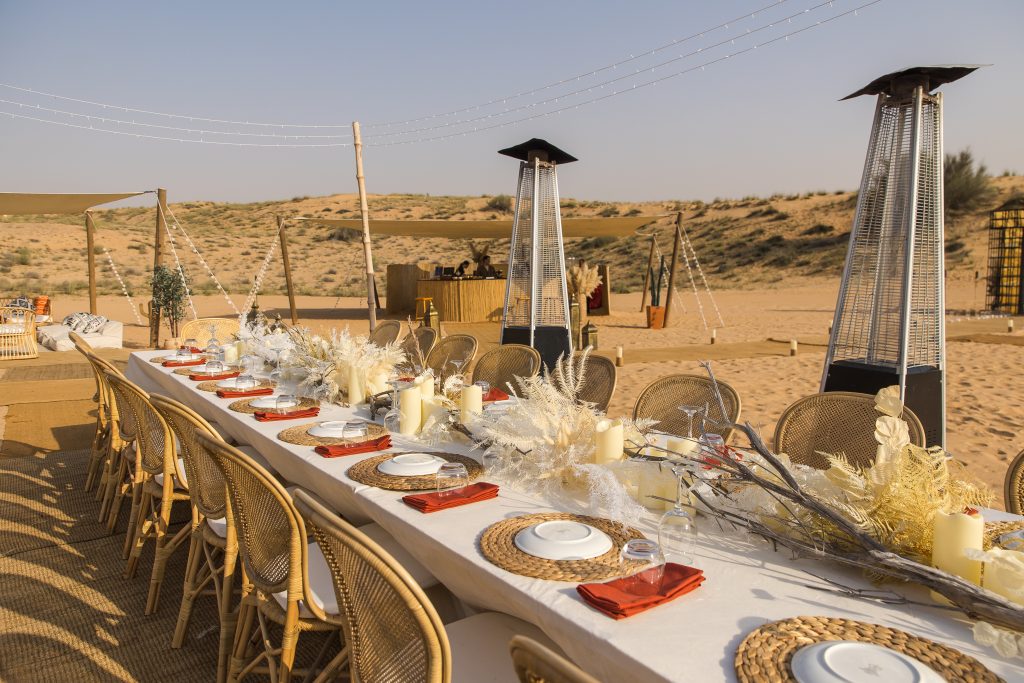
A private request, whether it is a birthday or an anniversary through our private events work, tends to have more room to move by a day or two if it protects the quality of the result. That small amount of flexibility, when a client is open to it, is often the difference between a good outcome and a genuinely excellent one on a tight timeline.
Either way, the brief needs to be honest from the first conversation. A corporate client who says the date is fixed but the budget can flex gives a planner something real to work with. A private client who is open to a Thursday instead of a Saturday, in exchange for a venue that would otherwise be impossible to secure in time, often ends up happier with the result than if the date had stayed rigid.
What Guests Never Need to Know

The one advantage a short timeline has over a long one is that nobody in the room has any idea how long it took to put together. A guest cannot tell the difference between three months of planning and ten days of it, provided the moments that matter were protected and the communication around the event was clear.
This means the pressure of a tight timeline should stay entirely behind the scenes. Guests should receive the same clarity they would for any other event, a clear time, a clear location, and clear expectations about dress and format, communicated early enough that nobody feels the rush that happened on the planning side. A guest who senses chaos before they even arrive has already had their evening affected, regardless of how well the event itself goes.
Why This Is a Test of Relationships, Not Creativity
Anyone can suggest a good idea for an event with three months of lead time. A last-minute request tests something else entirely, whether the people you are calling actually want to help you, based on how you have treated them in the past.
This is the part of the business that never shows up in a portfolio. It is years of paying vendors on time, being straightforward about budgets, and never treating a supplier as disposable once the event is over. When the ten-day call comes in, that history is what gets answered on the first ring instead of the fifth.

This is also why the never-say-no approach that defines how we work matters most under exactly this kind of pressure. A tight timeline is not a reason to lower what a client should expect. It is a reason to move faster and call in favours a newer company simply does not have.
If you need an event pulled together in Dubai on a timeline that feels impossible, get in touch before you assume it cannot be done properly. The earlier we know, even by a day, the more of the list above we can protect.

